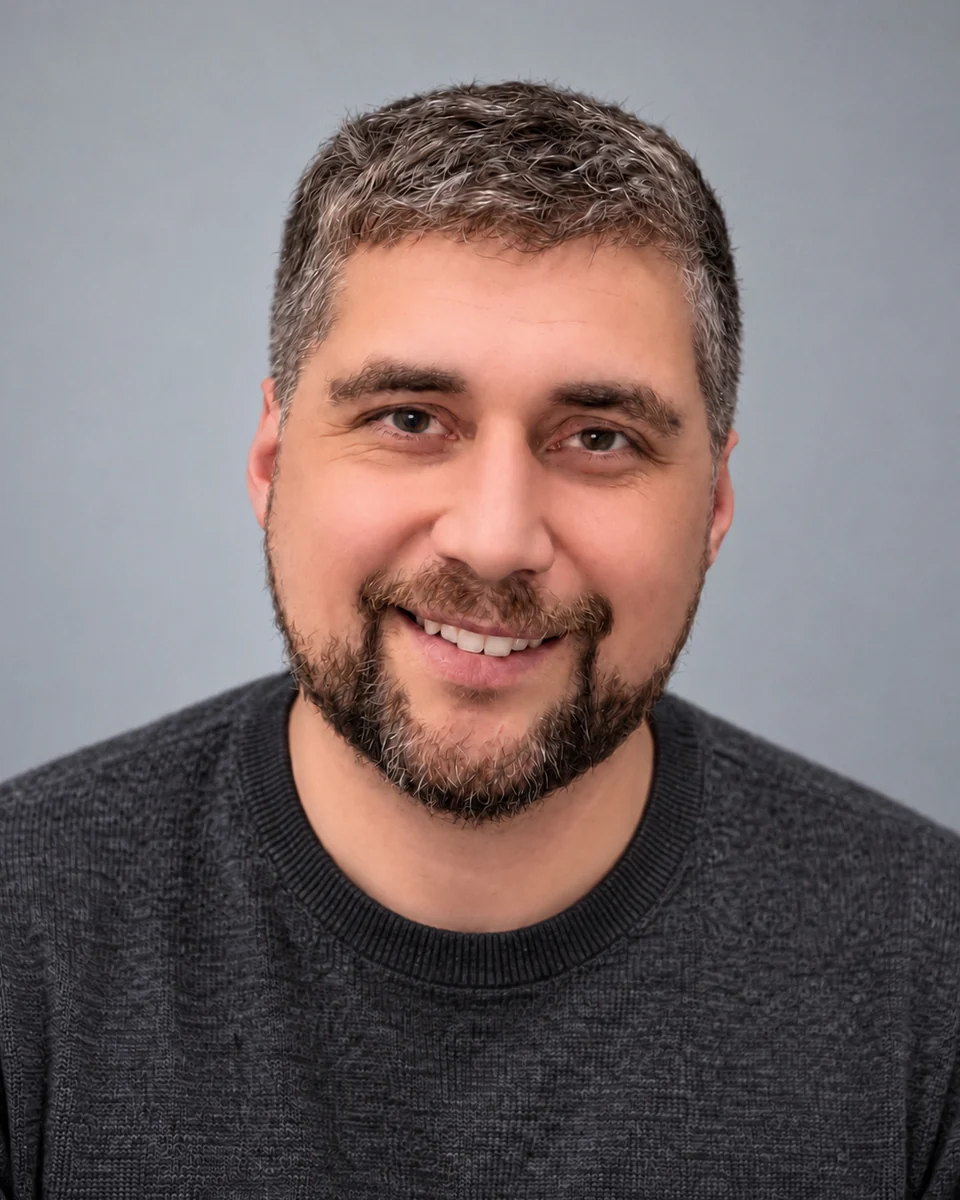
Kurt Watkins
Founder, Watkins Legal. Since 2014 he has handled transactions for technology companies and fund formation for sponsors.
California · New York · New Jersey
Seton Hall University School of Law, J.D., concentration in intellectual property. Distinguished Scholar and Fellow, Center for Policy and Research.
Fordham University, B.A. magna cum laude, Classics, Philosophy and Political Science.
Los Angeles and New York. Founded 2018.
Renno & Co LLP, a Canada-based technology law firm serving clients in the United States and internationally.
Kurt came to law from two directions at once. He grew up a tinkerer with an early love of the sciences and computer programming, then studied classics and philosophy at Fordham, and he chose law as the one discipline that would let him keep both: close reading and argument, applied to people building something new. His clients are engineers, founders and fund managers who want a lawyer who understands what they are building before he tells them how to structure it.
How the practice developed
He began at a small firm and worked his way to a national firm in New York. In April 2018 he left to start Watkins Legal, because the companies he most wanted to work with were early, technical and moving quickly, and large-firm economics served them worst. The first clients were venture-backed technology companies and venture funds, and that work is still the base of the practice.
Digital assets came next, at the institutional end of the market. He acted for protocol developers and ecosystem foundations, and eventually for the developer of a major layer-one network across the table from a federally chartered bank over the custody of on-chain collateral. That work taught him how a conservative counterparty reads a contract for a technology it has never held before.
The move into AI infrastructure drew on both. A data-center campus is financed like real estate, sold like power and depreciates like hardware, and the lawyer papering it has to be fluent in all three at once. Most lawyers who market an AI practice advise on governance and privacy. Kurt papers the deals themselves: the acquisitions, the financings, the offtake agreements and the joint ventures. He also forms compute infrastructure funds for sponsors and represents the companies building on top of that infrastructure. Recent work includes the sponsor-side formation of a compute infrastructure fund raising up to $900 million and the buyer-side acquisition of a two-hundred-megawatt data-center campus.
Emerging financial products follow a pattern he has seen before: a new category arrives, and the lawyers who serve it well are the ones who learn the technology first. He learns it well enough to argue with the engineers, then writes agreements a bank, a lender or a regulator will accept.
He added California after sitting for the bar in 2020, in the middle of the pandemic, without stepping away from his clients. The practice is based in Los Angeles, with an office in New York and clients across the United States and abroad.
How he works
Clients get Kurt, not an associate who reports to him or a team they have to be introduced to. He works where his clients work, usually inside their Slack, and his redlines change what the deal requires and leave the rest alone. He says what he thinks, including when the answer is that the structure on the table should not be built the way it is being proposed.
Where a matter needs tax, offshore or local counsel, he brings in specialists he knows well and stays accountable for the whole. Most of his clients have been with him for years.
The first conversation is with Kurt.
So is every one after it. Send a note about what you are working on. He reads and replies to each one himself.